
How to Explain Marketing’s Impact on Pipeline and Revenue
Most marketing teams are struggling to keep up with the ever-evolving expectations placed on them from leadership. They are also struggling to explain what the work is actually producing. One of the most common questions we hear during the sales process is: “How can I show the ROI on our marketing spend?”

The campaigns are running. Content is going out. Traffic is up. But when leadership asks whether marketing is moving the pipeline – or whether the budget is earning its keep – the answer gets complicated fast.
This is not a technology problem. It is a language problem. Marketing and business leadership are measuring different things, having two different conversations, and straining for alignment.
Getting to a shared picture of what marketing is actually producing – and why it matters – requires a different approach to pipeline marketing analytics and reporting than most teams currently use.
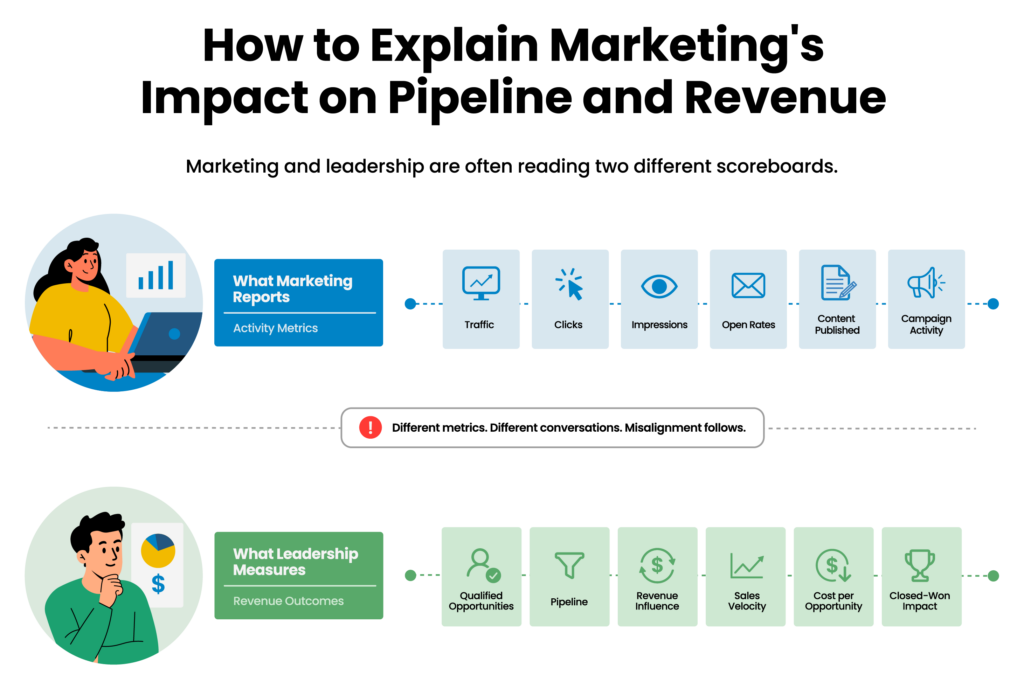
Why the Conversation About Pipeline Marketing Analytics Keeps Breaking Down
Sales and marketing leaders can look at the same month and walk away with completely different conclusions about whether marketing is working. That is not a trust problem. It is a visibility problem that shows up in a few specific ways.
Marketing Metrics Focus On Activity. Leadership Teams Focus On Revenue.
Page views, impressions, email open rates –these numbers matter internally. But they do not answer the question leadership is actually asking.
When a VP of Sales wants to know whether marketing is helping close deals, they want to see pipeline contribution, revenue influence, and which marketing activities are actually connected to qualified opportunities. Most reporting structures are not built to show that. So the conversation stalls or turns into a tug-of-war over the data.
Attribution Is Genuinely Hard – and Most Teams Are Not Set Up for It
A buyer researches your company on LinkedIn, reads a blog, gets a cold email, and then responds to a sales rep’s follow-up call three weeks later. Which touchpoint gets credit?
Multi-touch attribution is the right answer in theory. In practice, most organizations lack the tools, data structures, or historical consistency to do it cleanly. So they either report nothing useful or report something that does not hold up when someone asks a follow-up question.
The Reporting Cadence Does Not Match the Sales Cycle
Marketing reports monthly. Sales cycles run 3-12 months. When leadership looks at last month’s numbers, they are looking at the output of decisions made two quarters ago. Most marketing teams cannot explain that lag clearly in the moment, so every monthly review feels less like a progress conversation and more like a cross-examination.
What Leadership Actually Needs to See in the Numbers
The goal is not a perfect attribution model. It is a consistent, credible story about how marketing activity connects to commercial outcomes – told in the language leadership already uses.
Pipeline Contribution, Not Just Lead Volume
How many opportunities in the current pipeline had meaningful marketing contact before the first sales conversation? That number – even if imperfect – is more useful to a sales-led leadership team than any traffic metric. Start there.
Influenced Pipeline vs. Sourced Pipeline
Marketing rarely gets sole credit for a closed deal in a sales-led organization. But it often plays a meaningful role in warming up accounts, building familiarity before outreach, and keeping the company visible during a long consideration process.
Separating sourced pipeline from influenced pipeline gives leadership a more honest picture – and gives marketing a more defensible one.
A Small Set of Leading Indicators That Actually Predict Revenue
Not every important signal shows up in revenue data. Domain-level website behavior from target accounts, engagement from known contacts before outreach, branded search trends – these are worth tracking not because they look impressive in a deck, but because they give the marketing and sales team early signals about which accounts are getting warm.
How to Build a Reporting Structure That Actually Holds Up
The problem most teams run into is not a lack of data. It’s that the original KPIs were not built around how the business actually sells.
Someone picked metrics because they were easy to track, or because a marketer said they mattered. The reports get built. The numbers get shared. And nobody in the room quite believes they’re looking at the right thing.
A reporting structure that holds up starts with the sales process, not the marketing calendar. Start by asking: what would have to be true in the marketing data for leadership to feel confident the program is contributing to revenue? That question produces different answers for every organization – and that is the point.
These things make reporting credible over time:
- It connects to a commercial language leadership already uses. Not marketing metrics translated into business terms – metrics that were built around business terms from the start.
- It accounts for the lag between marketing activity and sales outcomes. A long sales cycle means last month’s report reflects decisions made two quarters ago. Naming that lag changes the conversation.
- It is honest about what can and cannot be attributed. Imperfect reporting that is clearly framed beats polished reporting that nobody trusts.

How Marketing Refresh Approaches Reporting
We focus our marketing reporting on your business goals. Every month, we produce a report covering performance across the channels in your program – website, social media, digital ads, keyword rankings, email, and more – and what the data says about business impact.
Each month’s report includes a written summary that goes beyond the numbers. It explains what the data means, what’s driving the results, and what we recommend doing next.
Every section connects the work we’re doing to the results you’re seeing — and when something isn’t performing as we want, we say so and explain why.
We also take the time in our regular client meetings to review the report together. Our goal is for our clients to leave the meeting with a clear picture of what’s working, what needs attention, and what’s next.
A few principles guide how we build and present every report:
- We connect results to the work. If a blog is now appearing in an AI search overview or a campaign drove a spike in qualified traffic, we show the line between what happened and how it impacted your company.
- We address the trends. If traffic dropped or a campaign underperformed, we provide context for why it happened and what we’re doing about it.
- We report against your goals. Each metric we track is tied to a defined goal your team agreed on.
Our approach is to report data that connects to how your business actually measures success.
What Changes When Reporting is Built This Way
When the report is designed to answer the questions leadership is asking, the monthly review stops feeling like a discussion about verbiage and starts feeling like a strategy conversation.
- Marketing isn’t explaining what impressions mean.
- Leadership isn’t asking whether the budget is being utilized properly.
- Sales isn’t questioning the lead quality.
Instead, everyone is looking at the same picture: what was executed within the strategy, what the marketing activity produced, what needs to change, and where the marketing program needs to go next.
For a sales-led organization trying to prove that marketing earns its place at the table, that shift matters more than any individual campaign result.

Where to Start If This Scenario Feels Familiar
If your marketing program is running but leadership doesn’t trust the numbers, or your team is spending a lot of time on pipeline marketing analytics without seeing the benefits, there are two places to start.
1. Get the strategy right first. If your program does not have clear goals tied to specific marketing activities, no reporting structure will fix that. Our Marketing Strategy & Blueprint lays the foundation, with a documented strategy and KPIs that align with how your business actually sells.
2. Get ongoing support that includes reporting built into the program. If the strategy is solid but reporting keeps slipping, or leadership is not getting the visibility they need on a consistent basis, our Marketing Management service keeps the program running. We keep leadership informed with a cadence that makes sense for your sales cycle.

Ready for a Refresh?
"*" indicates required fields